PARTNERSHIPS
Can One Texas Site Fix America's Battery Supply Problem?
Wildcat and EnergyX partner on a 15,000-tonne LFP cathode plant in Texas, backed by co-located lithium supply
9 Jun 2026
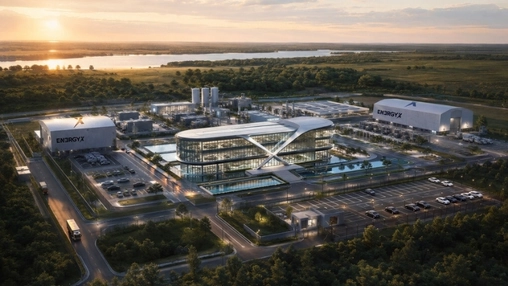
China produces virtually all of the world's lithium iron phosphate cathode material. For American battery makers, that is less a market condition than a structural vulnerability. A joint venture announced on June 4th between Wildcat Discovery Technologies and EnergyX proposes something the United States has not yet managed: an unbroken domestic chain from raw lithium to finished cathode, on a single site in Northeast Texas.
The plant, to be built at the TexAmericas Center in Hooks, targets 15,000 metric tonnes of LFP cathode per year. What distinguishes it from prior domestic ambitions is co-location. EnergyX's Project Lonestar already extracts lithium brine from the same 330-acre footprint and converts it to battery-grade lithium carbonate. Controlling that upstream input on-site removes the price volatility and import delays that have undermined earlier efforts to build competitive supply outside Asia.
Wildcat brings an AI-assisted materials platform and a product roadmap covering next-generation cobalt-free chemistries. Demonstration-scale output has been validated at both companies' facilities, with material already sampled to customers in energy storage, electric vehicles, and defence. The partners are seeking over $230 million in total investment, including a Department of Energy grant to speed construction.
Proximity to the Red River Army Depot sharpens the project's national-security argument. Around 150 permanent jobs and up to 1,200 construction roles are expected in the region.
Federal domestic-content rules already require a rising share of battery components to come from non-foreign-entity sources, with thresholds tightening through 2030. Those rules create a regulatory tailwind. Whether the project can meet them on schedule, and at competitive cost, is another matter. Integrated supply chains are elegant in theory; they are expensive and complex to build.
Still, for policymakers watching Chinese producers maintain near-complete control of global LFP output, a shovel-ready, vertically integrated project on American soil offers something the United States battery industry has long lacked: a credible starting point.
Related News


SUBSCRIBE FOR UPDATES
By submitting, you agree to receive email communications from the event organizers, including upcoming promotions and discounted tickets, news, and access to related events.