INNOVATION
Nine Minutes to Full: Sunwoda Changes the Charging Game
Sunwoda's Xingchi 2.0 charges LFP batteries from 5% to 95% in nine minutes, raising the bar for EV speed
3 Jun 2026
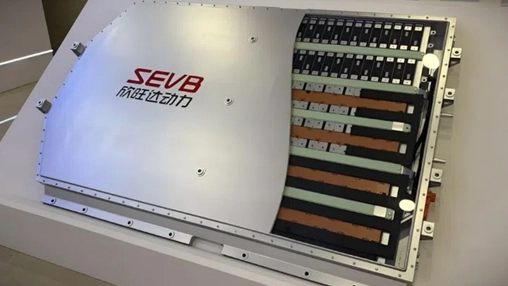
Nine minutes from nearly empty to 95% charged. Sunwoda's Xingchi Supercharge Battery 2.0, unveiled at the company's technology day in Beijing on April 16, 2026, delivers that window through a 98.8 kWh, 844.8-volt system built from 264 prismatic cells supporting a 15C peak charging rate at 1,800 amperes. Drivers can cover 5% to 75% in five and a half minutes. Rated for more than 1,500 cycles, the pack carries a warranty commitment of unrestricted fast-charging use, signaling confidence in its durability under sustained high-rate cycling.
Analysts noted that 15C represents a peak rather than a sustained rate across the full session. Averaged over the 5%-to-95% window, the effective rate lands at approximately 6.7C, still well above the industry norm for lithium iron phosphate and sufficient to close the real-world gap with nickel-based chemistries. For a chemistry long associated with slower charge acceptance, the figure carries weight.
Speed has become the axis around which battery competition now turns. BYD's Blade Battery 2.0, launched in March 2026, matches Sunwoda's nine-minute mark, while CATL's third-generation Shenxing completed a 10%-to-98% charge in 6 minutes and 27 seconds the following month. What sets Sunwoda apart is market positioning: with 1.4 GWh installed as of March 2026 and a 2.5% global share, the company targets cost-conscious mass-market automakers rather than flagship programs, a goal long seen as central to broadening fast-charging access beyond the premium segment.
The broader roadmap reaches further. A long-life passenger variant targets zero capacity loss in the first year and less than 10% degradation over a decade. Sodium-ion development addresses entry-level EVs and cold-climate markets. An AI-driven battery management strategy, according to company statements, spans research, manufacturing, and lifecycle monitoring.
Charging infrastructure remains the unresolved variable. Sustained 1,800-ampere delivery requires high-power stations still unevenly deployed across even China's advanced grid. Battery engineers have narrowed the speed gap considerably; grid operators and infrastructure builders face pressure to follow.
Related News


SUBSCRIBE FOR UPDATES
By submitting, you agree to receive email communications from the event organizers, including upcoming promotions and discounted tickets, news, and access to related events.